12 hr
Ranthambore National Park Day Trip & Safari from Jaipur
- Expert local guide
- Small group
- Skip-the-line access
- Free cancellation
Ranthambore National Park Tours — Zone Entry & Safari Seats
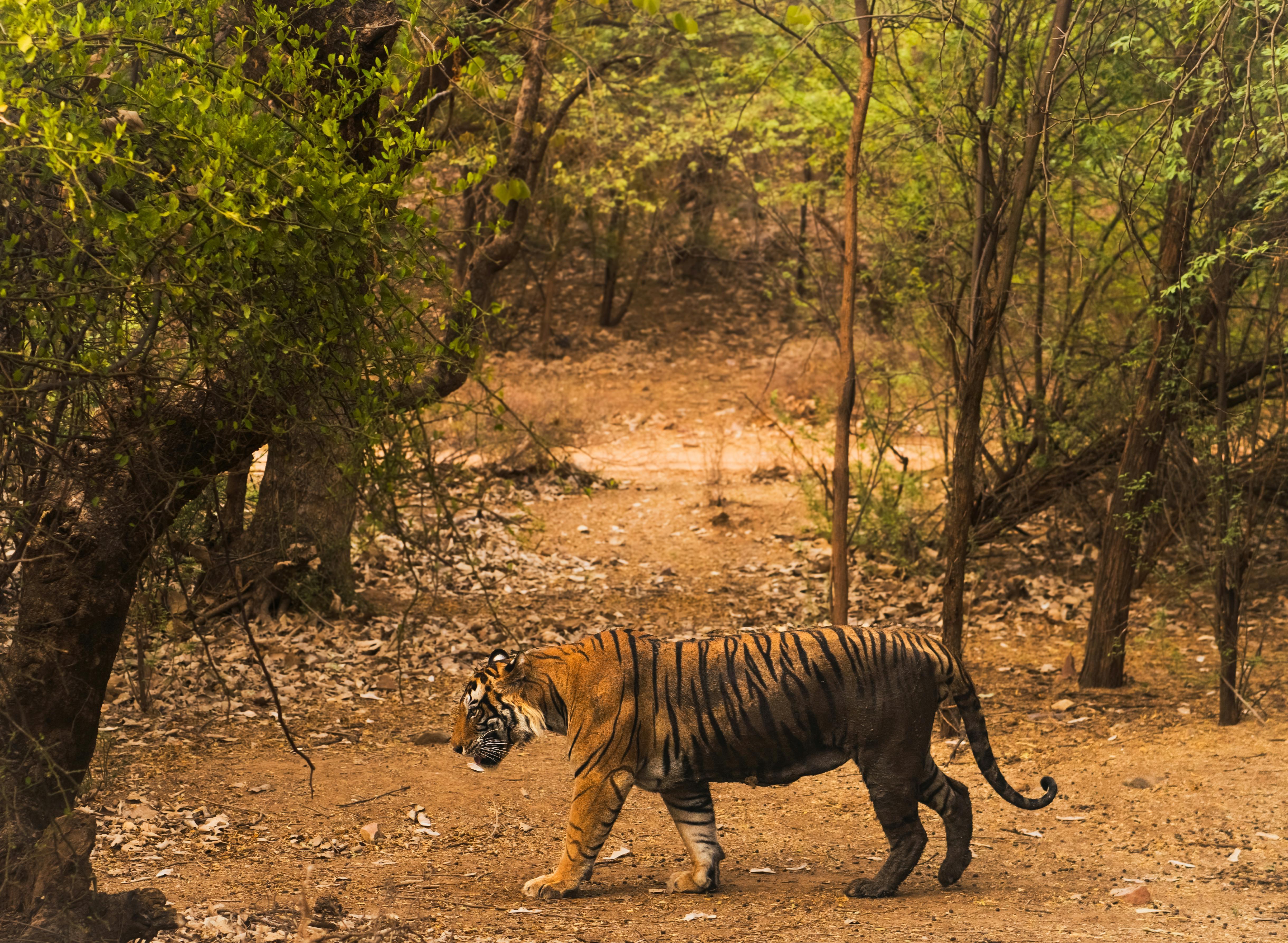
Dhok forest at first light, tiger tracks in dry riverbed dust
Compare fares, pick the fit — all bookings are mobile-voucher and eligible for free cancellation where shown.
12 hr
3 hr 30 min
72 hr
Choosing between the two official vehicle types is the first real decision for Ranthambore National Park Tours, since jeep and canter permits cover different seating, zones, and booking windows. This comparison lays out how each affects your gypsy safari booking, from privacy to zone access, so you can pick the right Ranthambore National Park Tours tickets for your style of travel.
|
Top pick Jeep Safari (6-Seater Gypsy) |
Canter Safari (20-Seater Open Bus) | |
|---|---|---|
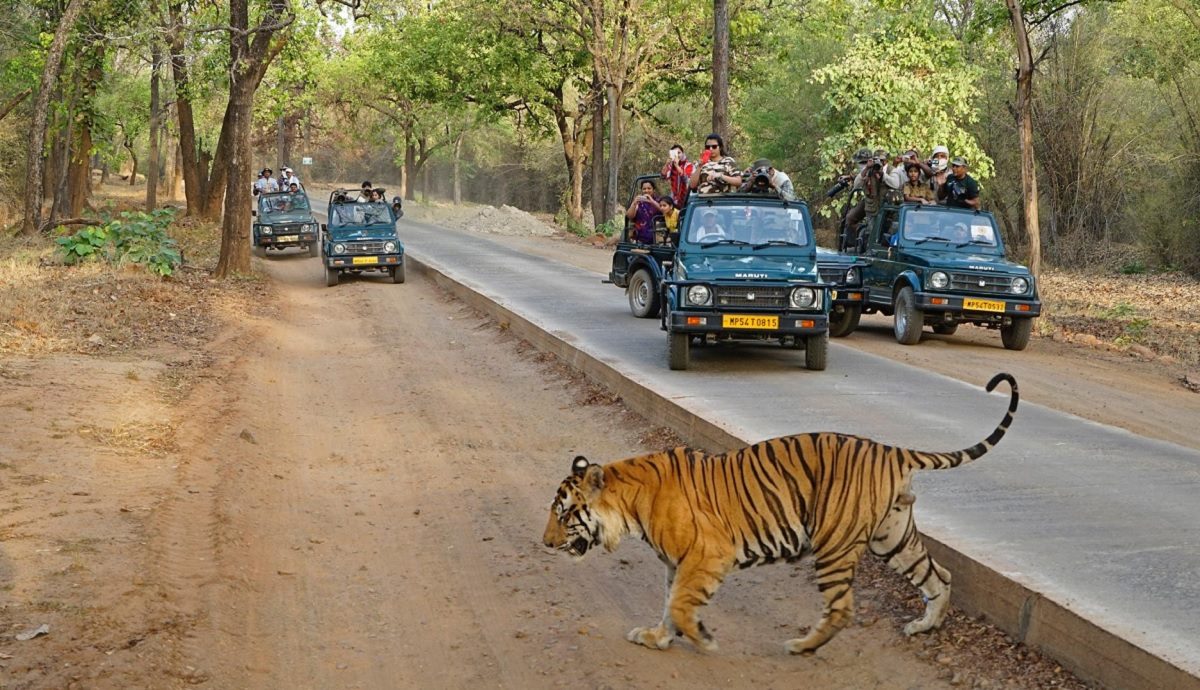
| Vehicle capacity | 6 seats — open-top Gypsy | 20 seats — open-top canter |
| Privacy and noise | Quieter, more personal ride | Louder, shared with larger group |
| Zone access | All 10 zones, including 7-8 | Barred from zones 7 and 8 |
| Booking lead time | Opens 90 days ahead, fills fast | Opens 90 days ahead, more seats available |
| Typical use case | Photography, close wildlife viewing | Groups and budget-conscious travellers |
| Mobility on narrow tracks | Manoeuvres tight, hilly trails easily | Struggles on narrow zone 7-8 tracks |
| Best for | First-timers wanting flexibility and access | Larger groups on a fixed budget |
| See tickets & prices |
Verdict: First-time visitors doing a Ranthambore National Park Tours tour should book the jeep for full zone access and a quieter ride, while canter tickets suit larger groups happy to trade some privacy for cost savings.
Worth it if you book two safaris
Ranthambore National Park Tours cost 2,400 INR per foreign adult for a canter safari, and that figure buys you a seat in a shared vehicle across one zone of dry deciduous forest, lakes and ruined gateways in the Aravalli-Vindhya belt. A single ride is a gamble: tiger sightings across the reserve hover around one in three, and the driver cannot choose your zone. Two rides roughly double your odds for 4,800 INR total, which still undercuts most Rajasthan wildlife safari packages of comparable quality. The core zones near Padam Talao and Rajbagh hold the densest tiger territory and the best chance of leopard, sloth bear, marsh crocodile and sambar. Ranthambore National Park Tours tickets pay off for anyone treating this as a two-day wildlife commitment. They disappoint travellers slotting one Ranthambore National Park Tours tour into a Golden Triangle day trip and expecting a guaranteed tiger. Serious birders and photographers get full value; casual sightseers often do not.
Bottom line: Budget for two rides on Ranthambore National Park Tours tours and the 2,400 INR entry justifies itself; budget for one and you are buying a lottery ticket.
Hand-picked experiences loved by thousands of travelers
3 hours
Free Cancellation
3-hour open-vehicle safari through Ranthambore's forests and ruins in search of the Royal Bengal Tiger.
3 days
Free Cancellation
3-day Delhi getaway with multiple jungle safaris chasing tiger sightings and Ranthambore Fort.
Guide or driver collects you from your hotel in Sawai Madhopur before dawn for transfer to your allotted safari gate.
ID verification against your permit at the entry gate for your assigned zone, part of standard Ranthambore National Park Tours procedure.
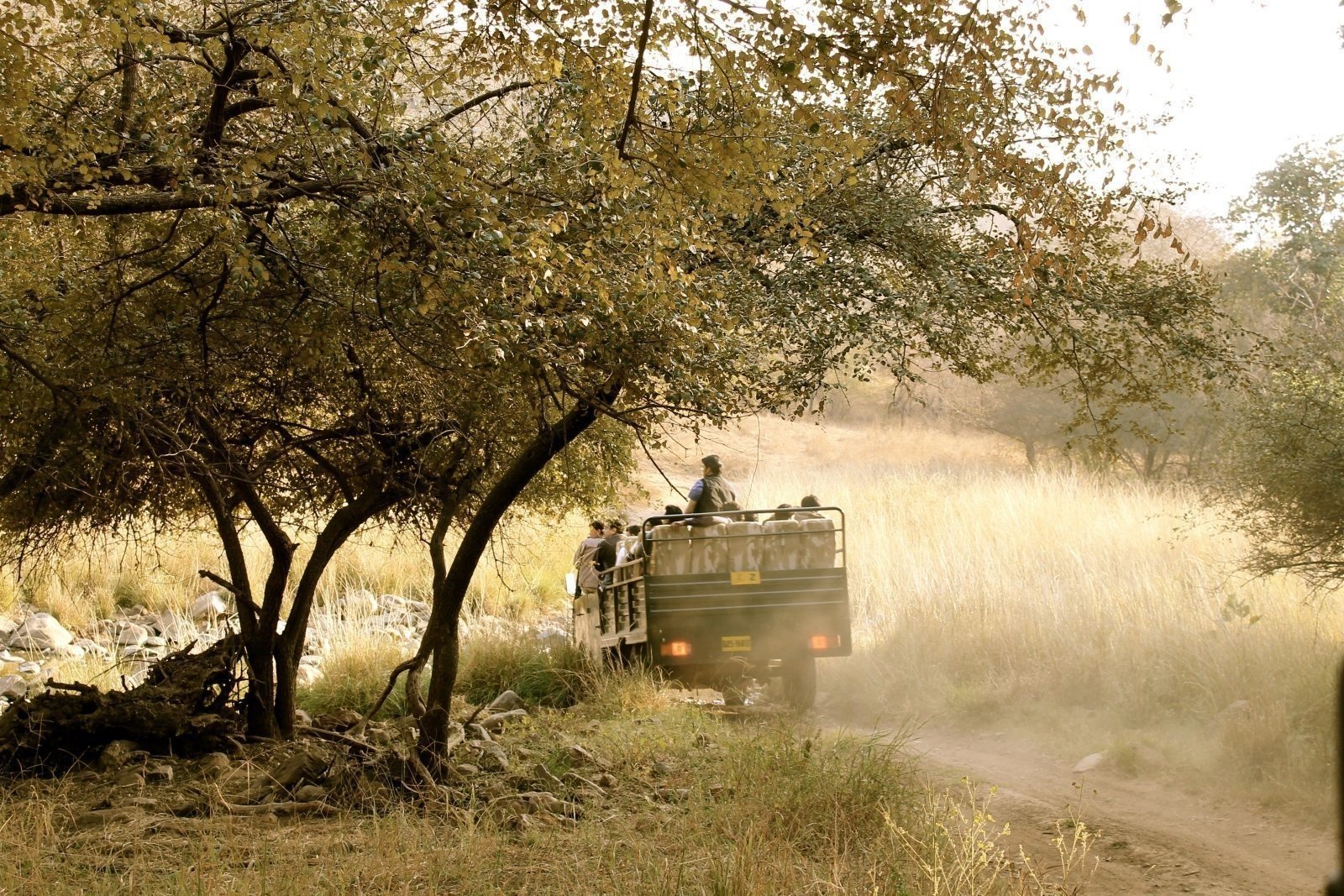
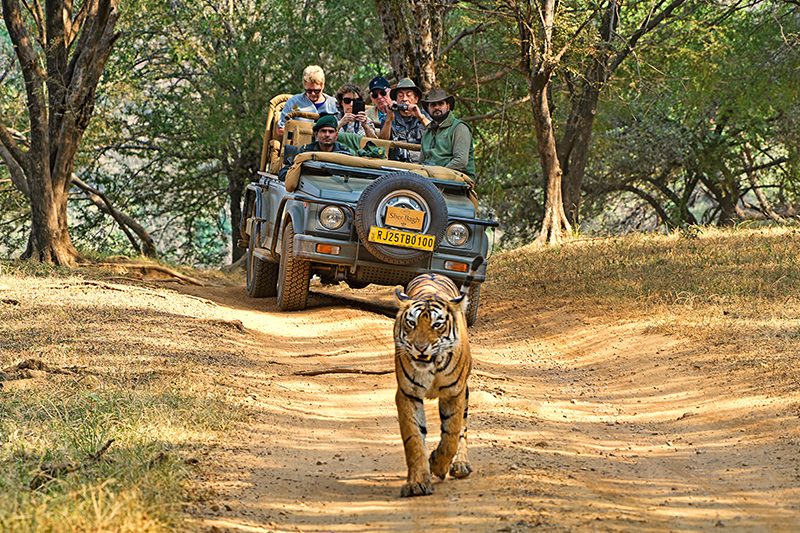
Canter or gypsy safari through your allotted zone from 06:30, covering lakes, forest tracks, and historic ruins.
Pass by Padam Talab or Raj Bagh lake areas in core zones with views of Ranthambore Fort in the background.
Drive back to your hotel or onward to Sawai Madhopur town for breakfast.
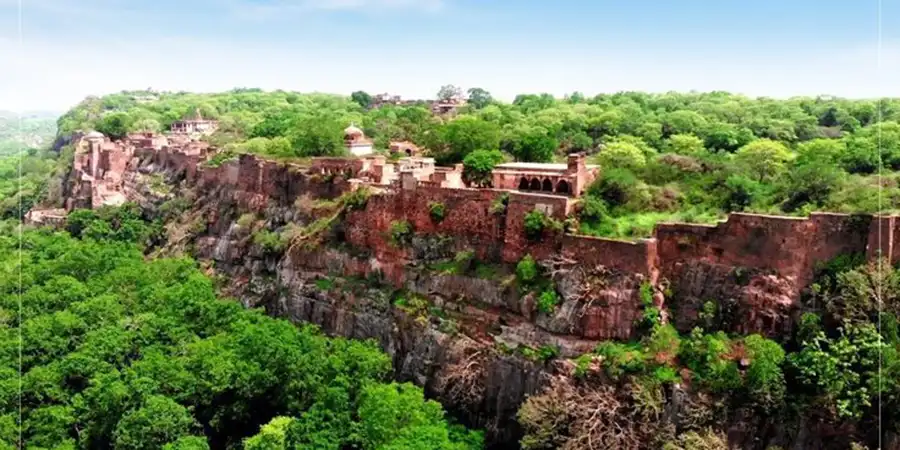
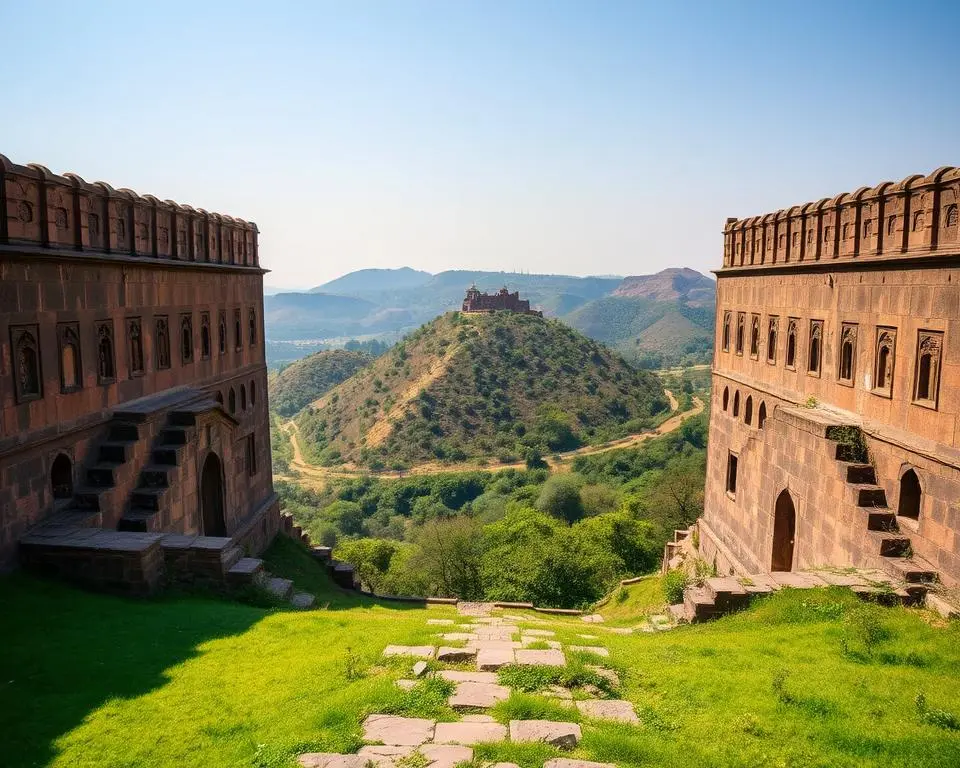
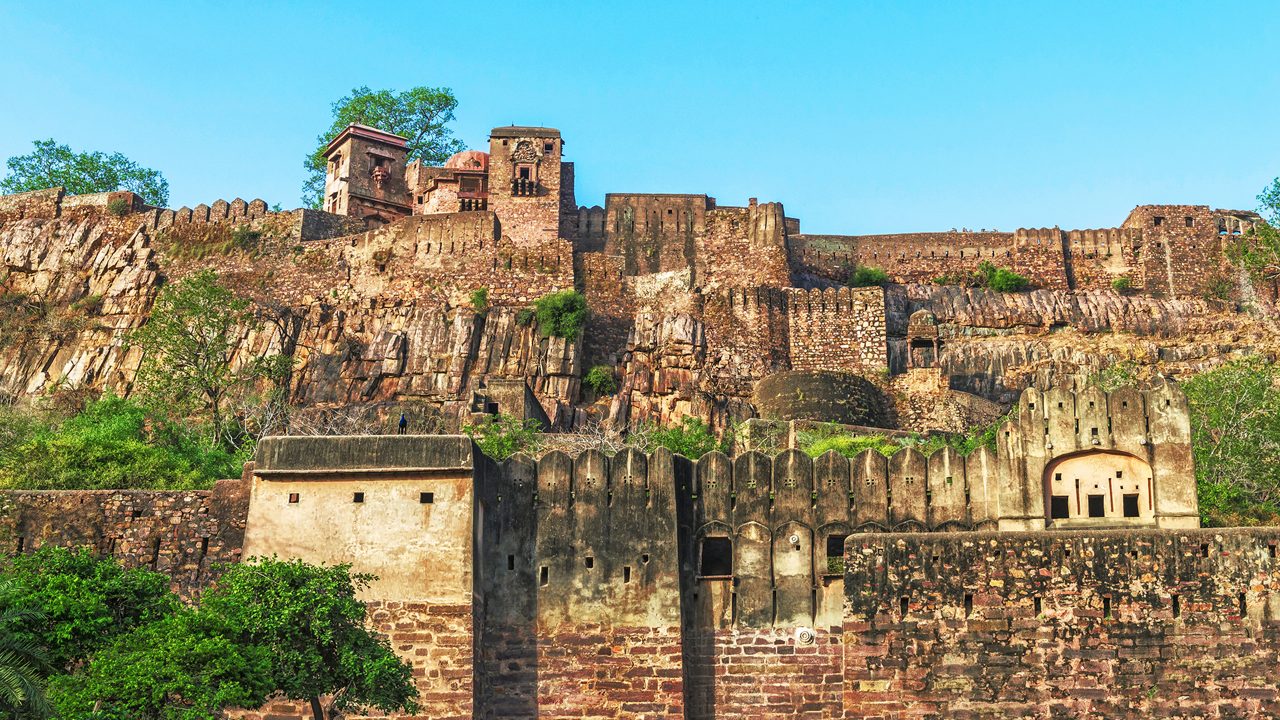
A hill fort dating to the 10th century, perched above the park's Zone 3 lakes and recognized as a UNESCO World Heritage Site among Rajasthan's hill forts. Its ramparts stretch across the ridge and offer a backdrop to some of the park's most photographed tiger sightings.
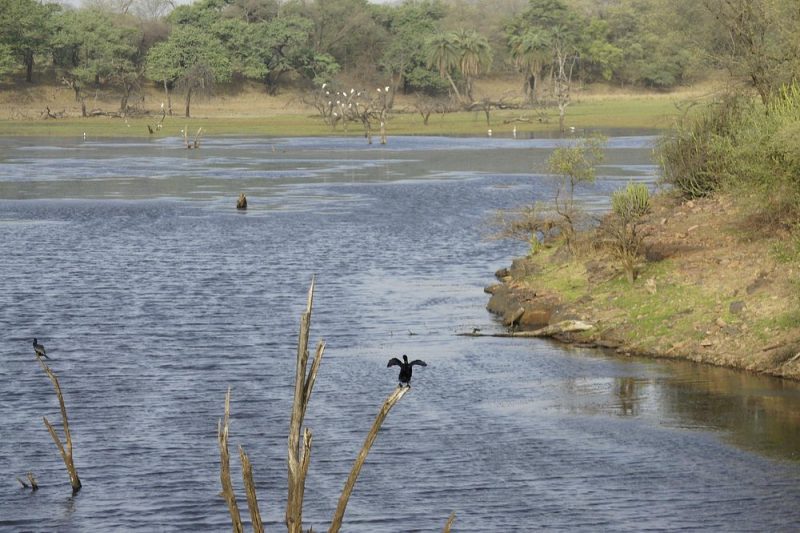
The largest of the park's three major lakes, ringed by dry deciduous forest and a frequent gathering point for tigers, sambar deer, and crocodiles during the dry season. Jogi Mahal, a former royal hunting lodge, sits at its edge.
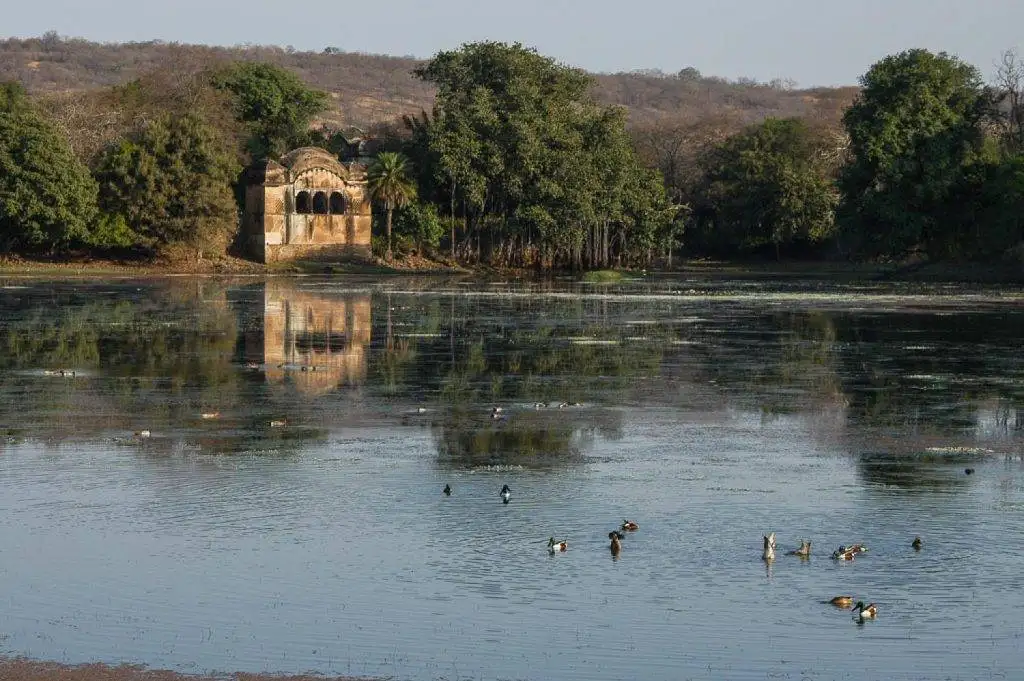
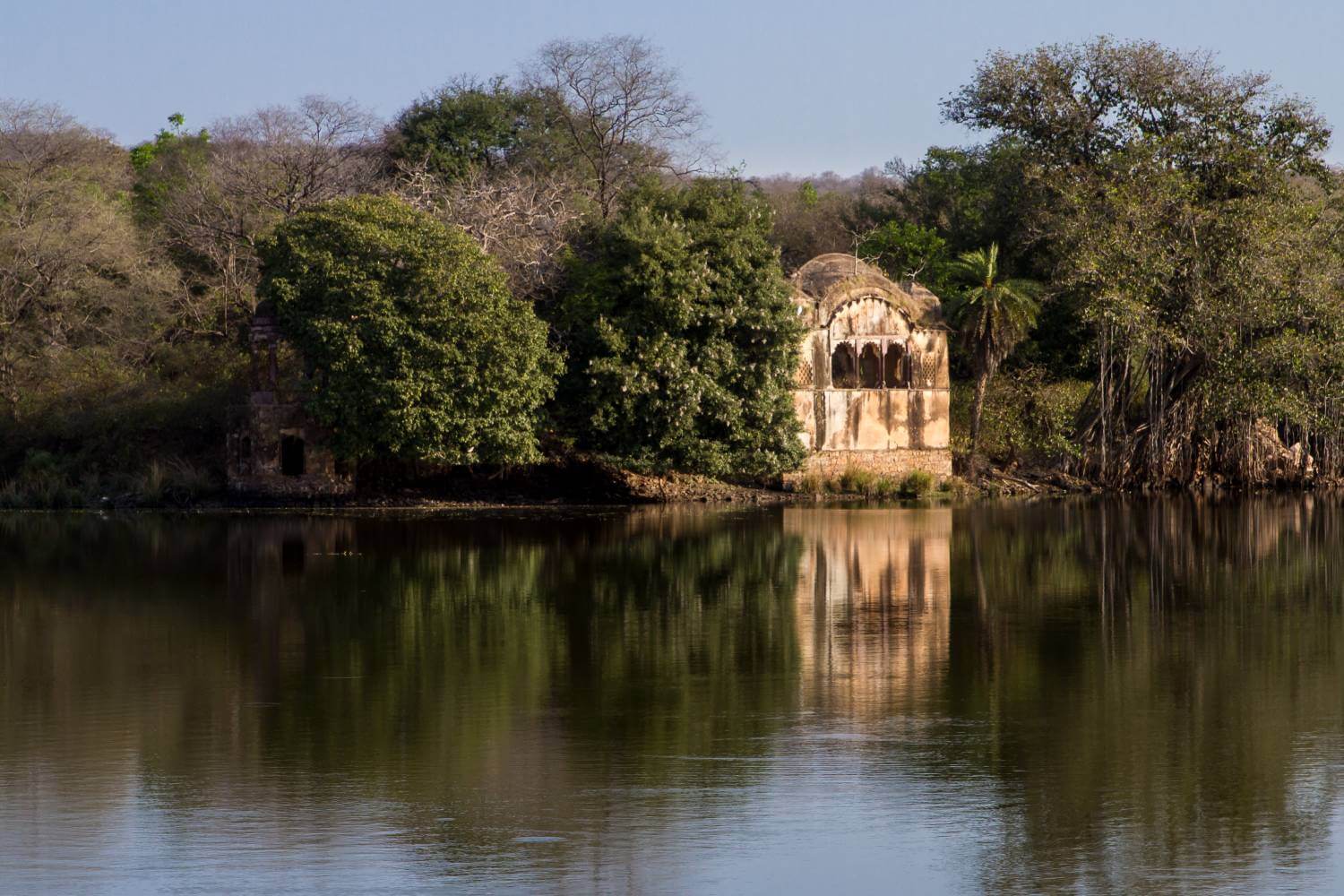
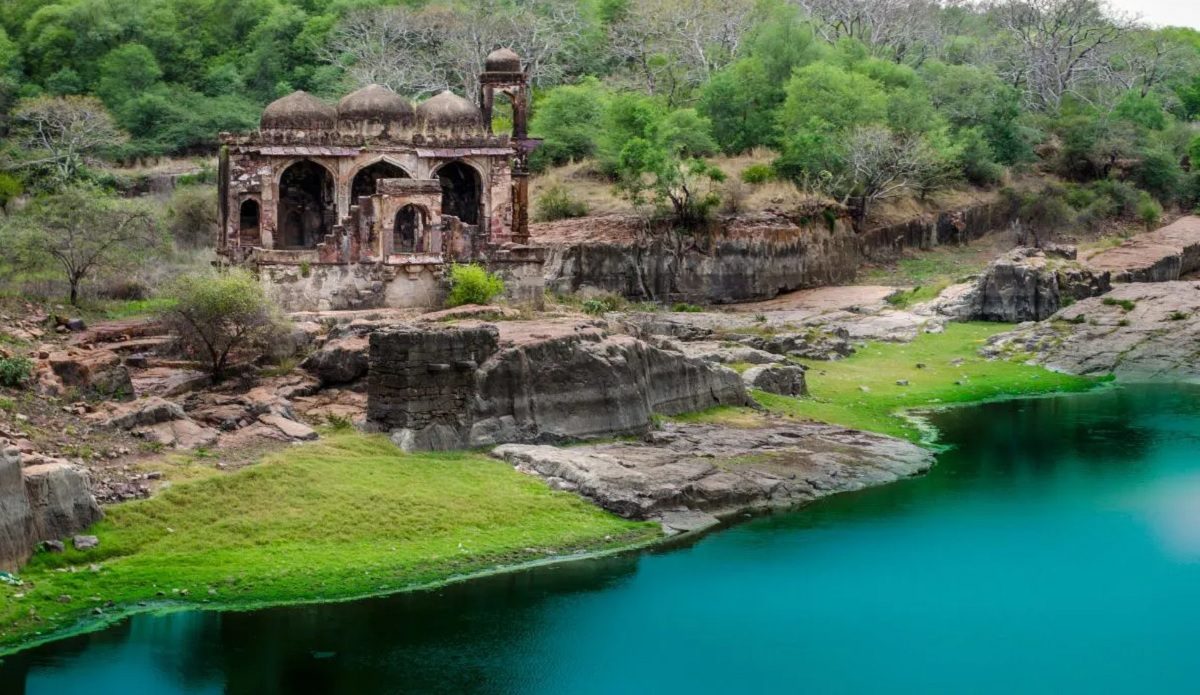
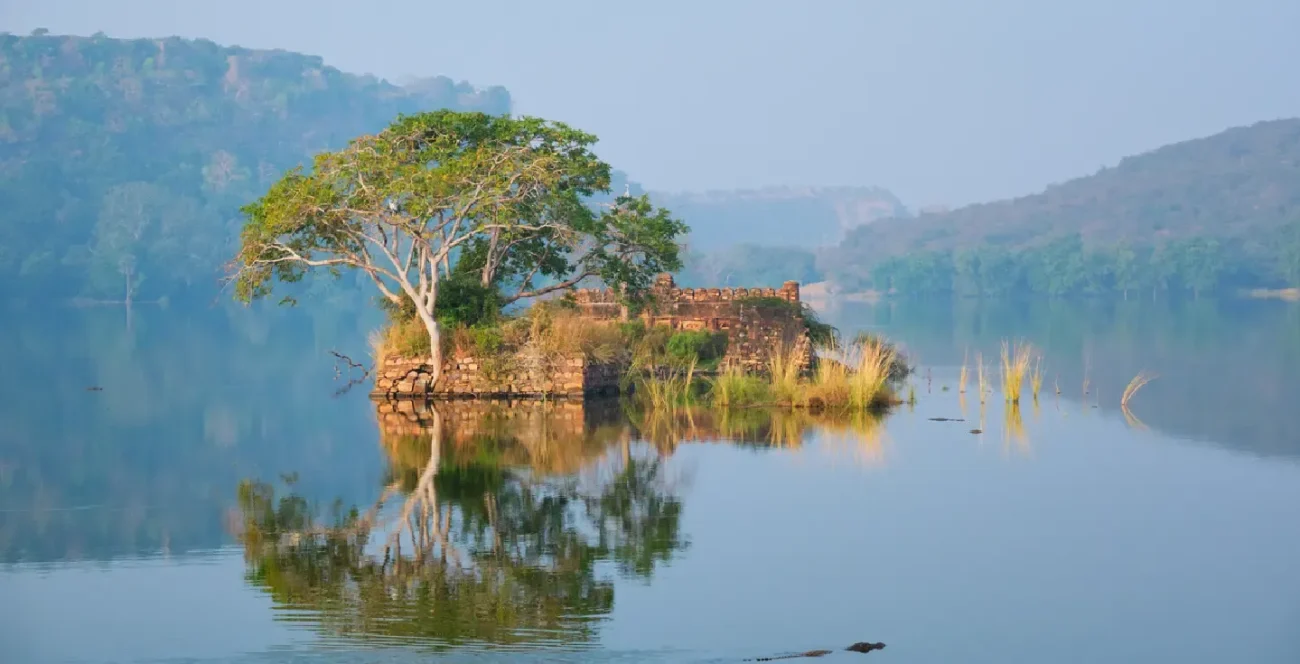
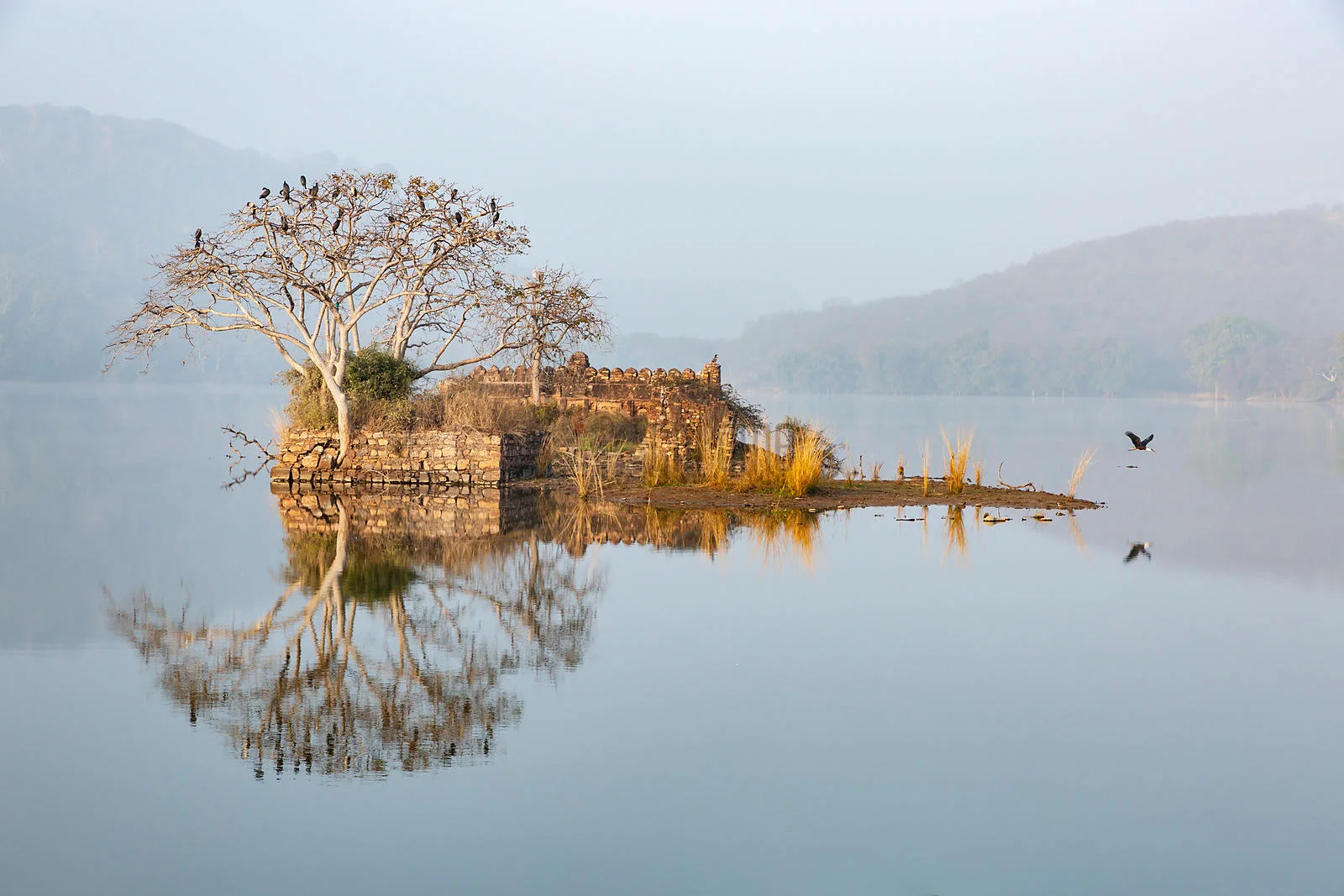
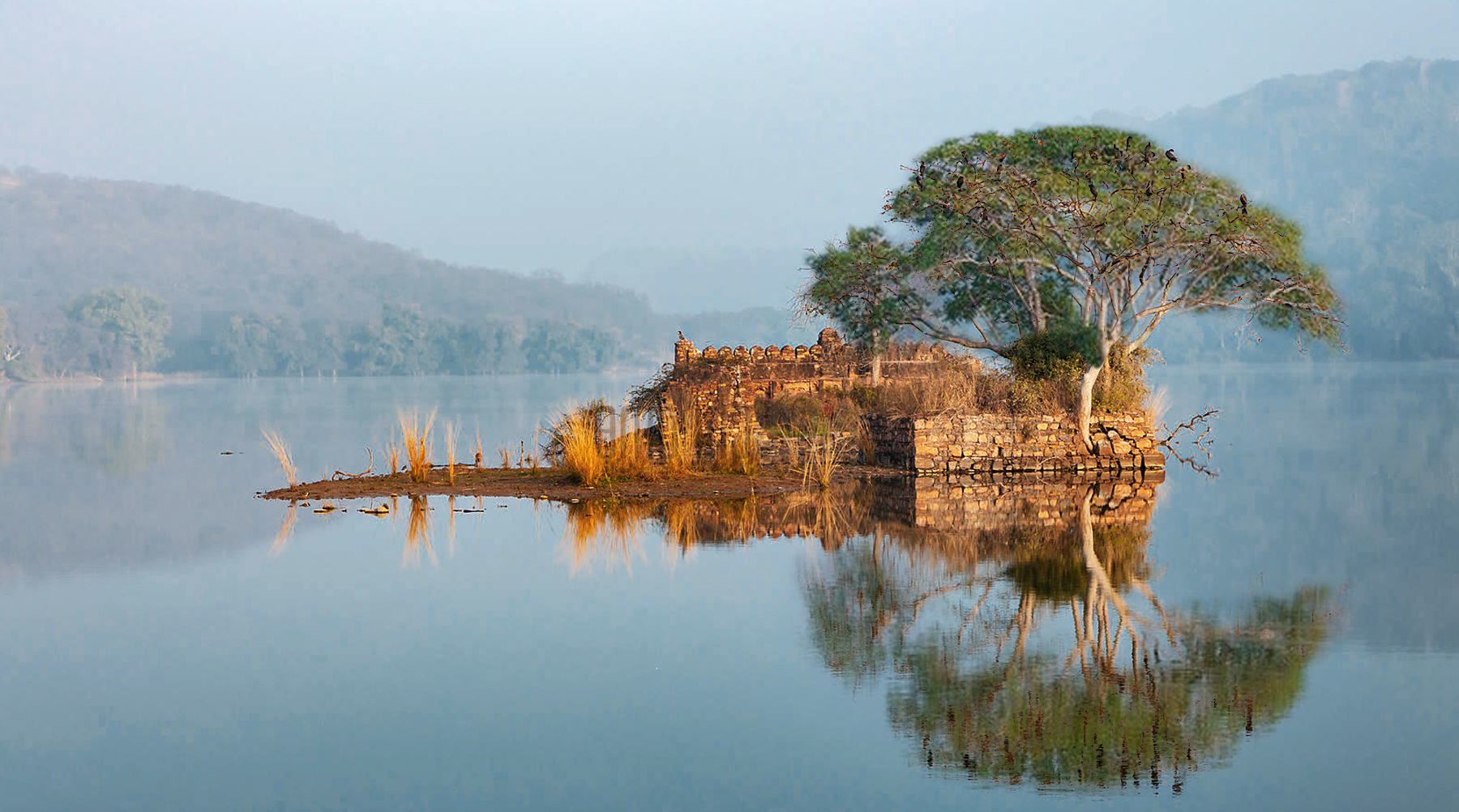
A cluster of crumbling pavilions and archways rising directly out of Raj Bagh lake's shallow water, built during the era of Ranthambore's Rajput rulers. The half-submerged arches are one of the park's most distinctive man-made features.
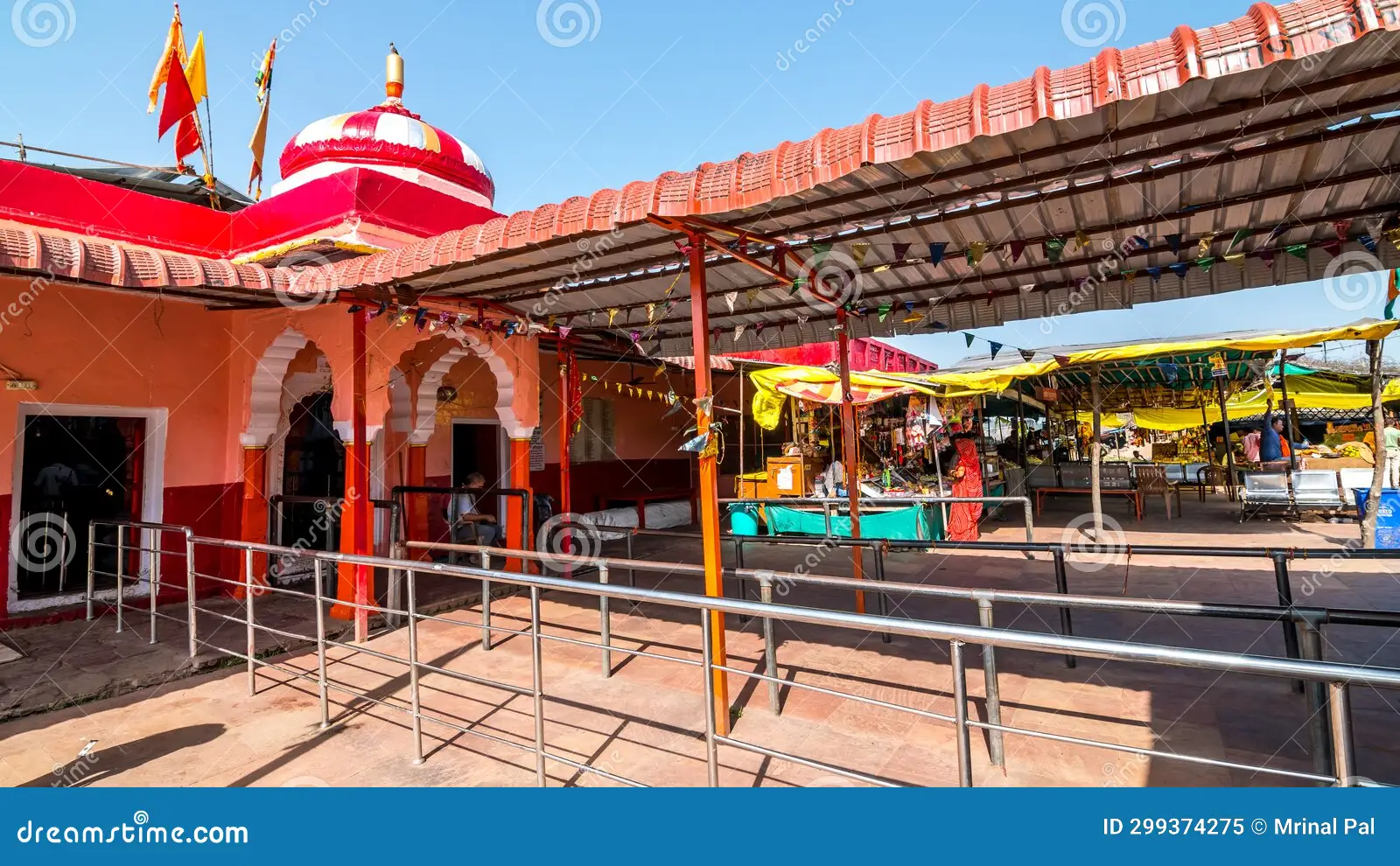
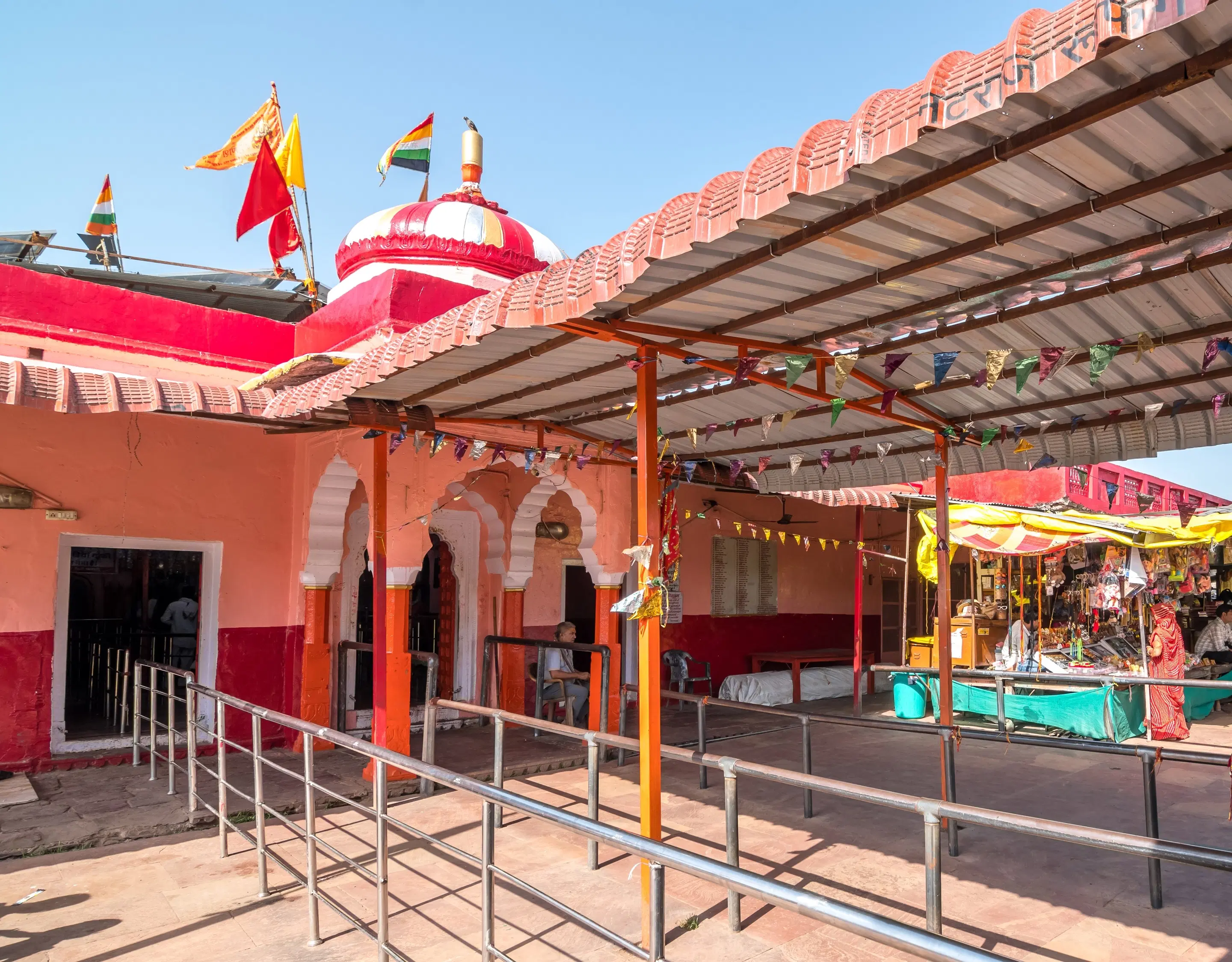
A temple inside Ranthambore Fort dedicated to a rare three-eyed form of Ganesh, said to date back roughly 1,000 years and drawing letters addressed to the deity from devotees nationwide requesting wedding invitations. It remains an active pilgrimage site accessed by road through the fort complex.
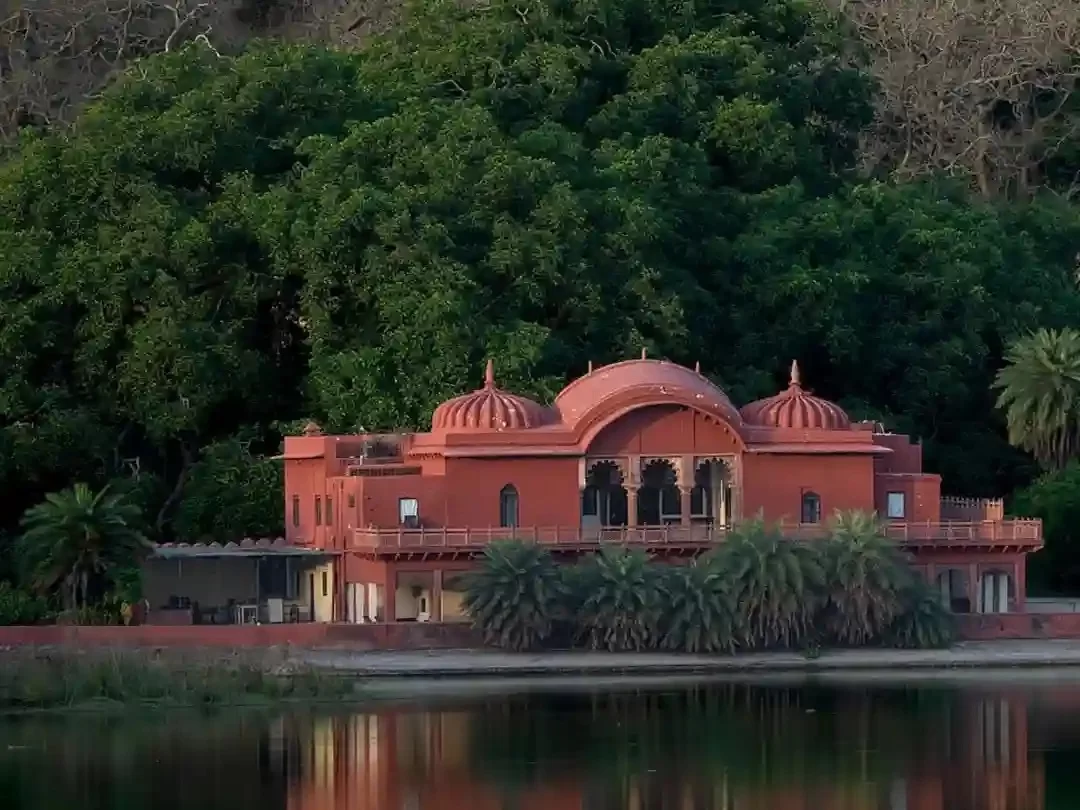
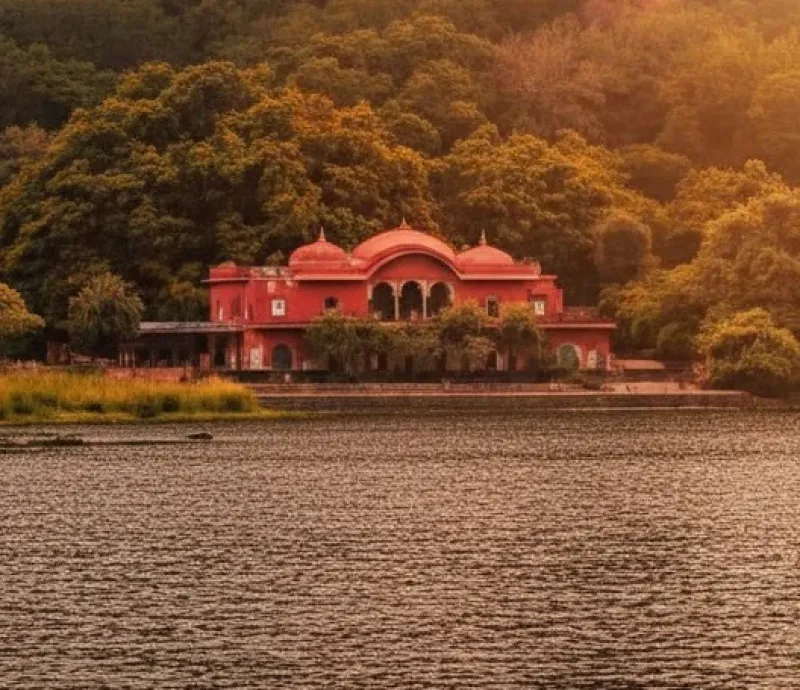
A former royal hunting lodge on the shore of Padam Talab, notable for standing beside one of Asia's second-largest banyan trees. It marks the entry and exit point for Zone 3 safaris.
A rocky, hilly stretch in the southern buffer zones known more for leopard sightings than tigers, given its rugged terrain and sparser tree cover. Sloth bears are also occasionally reported moving through this valley.
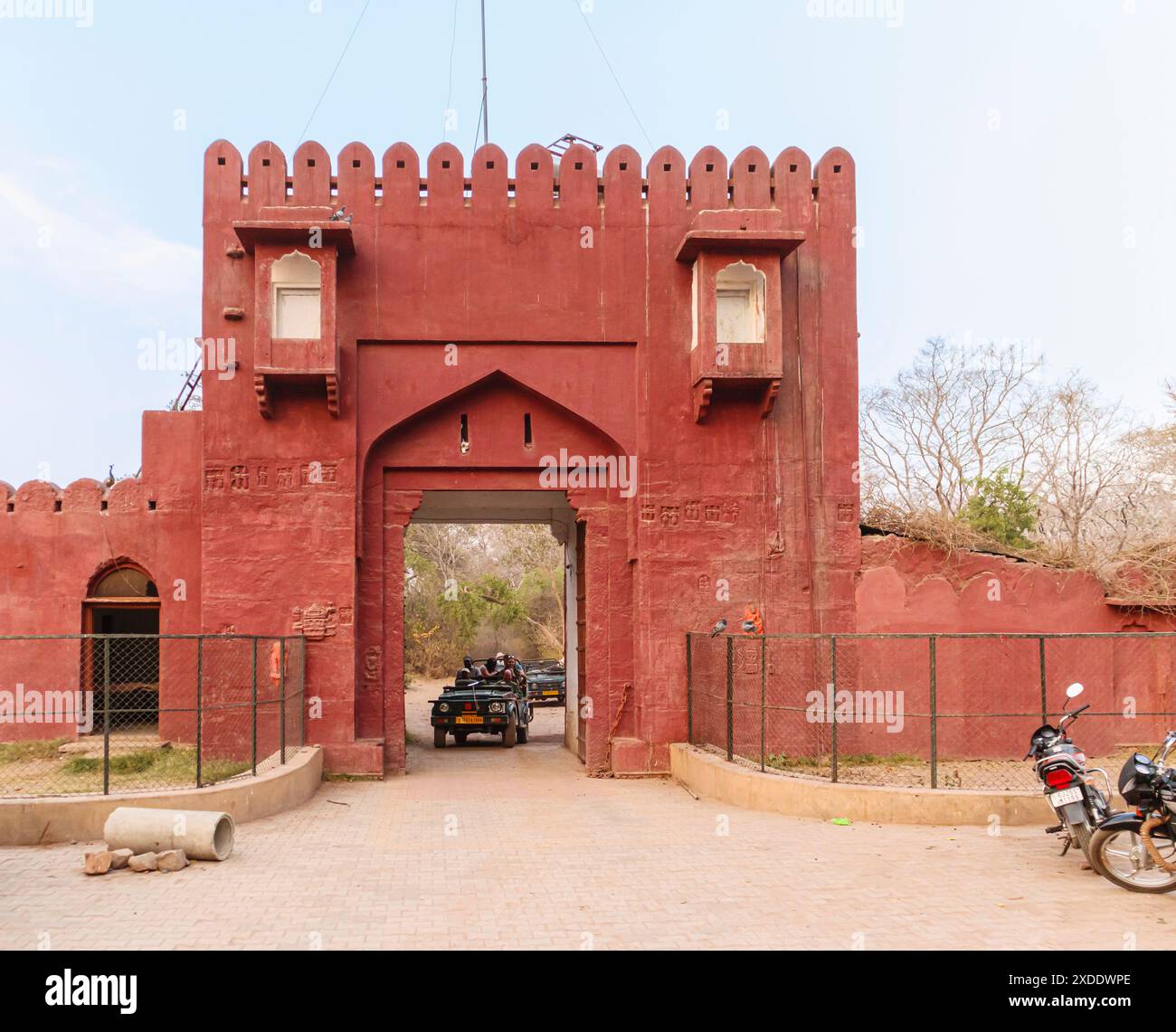
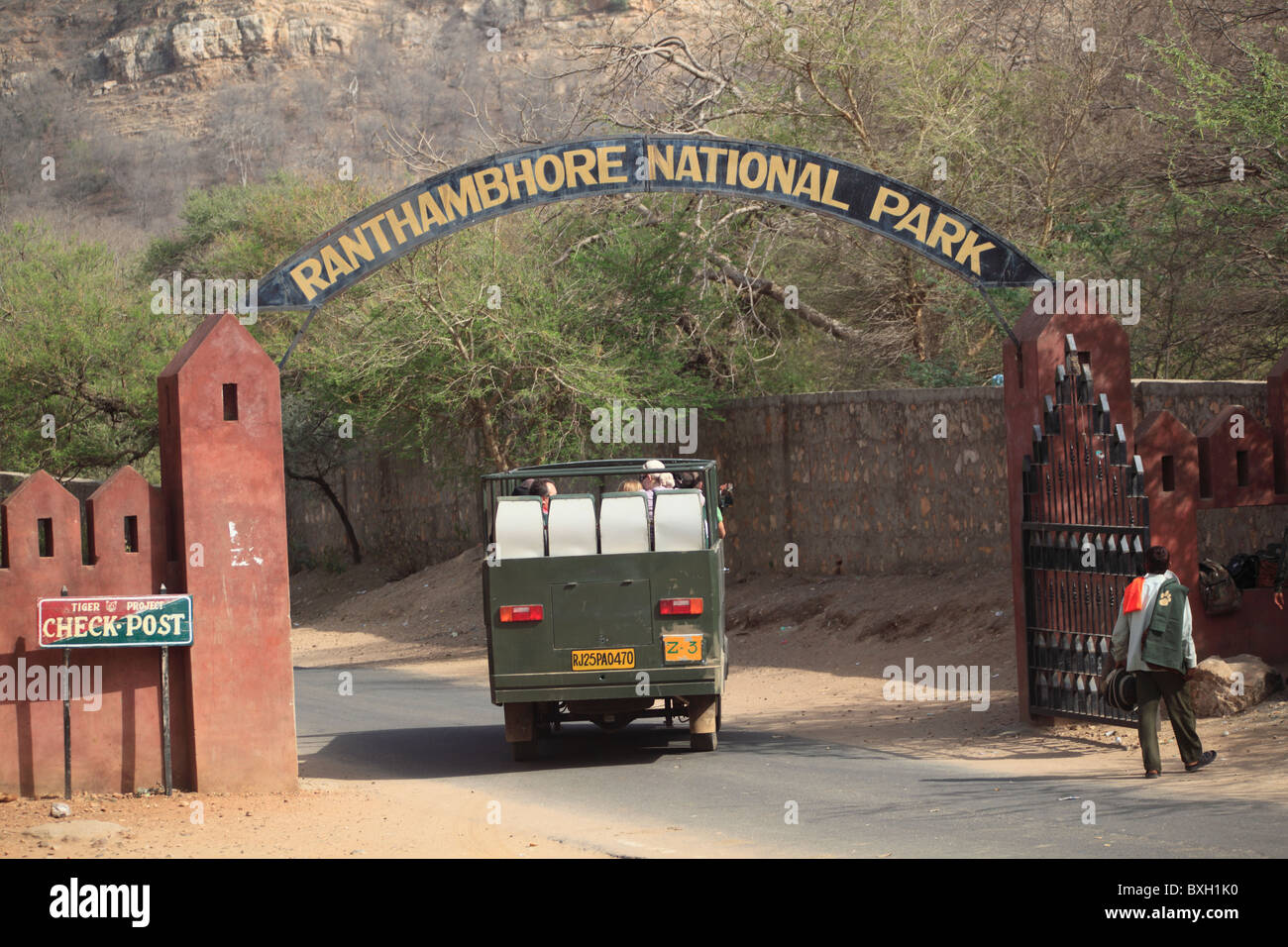
You reach the gate on Ranthambore Road before the light turns. The best arrival window is 06:30–10:00, when temperatures stay low and animals are still moving; your permit is checked against your passport, and a naturalist climbs in beside the driver.
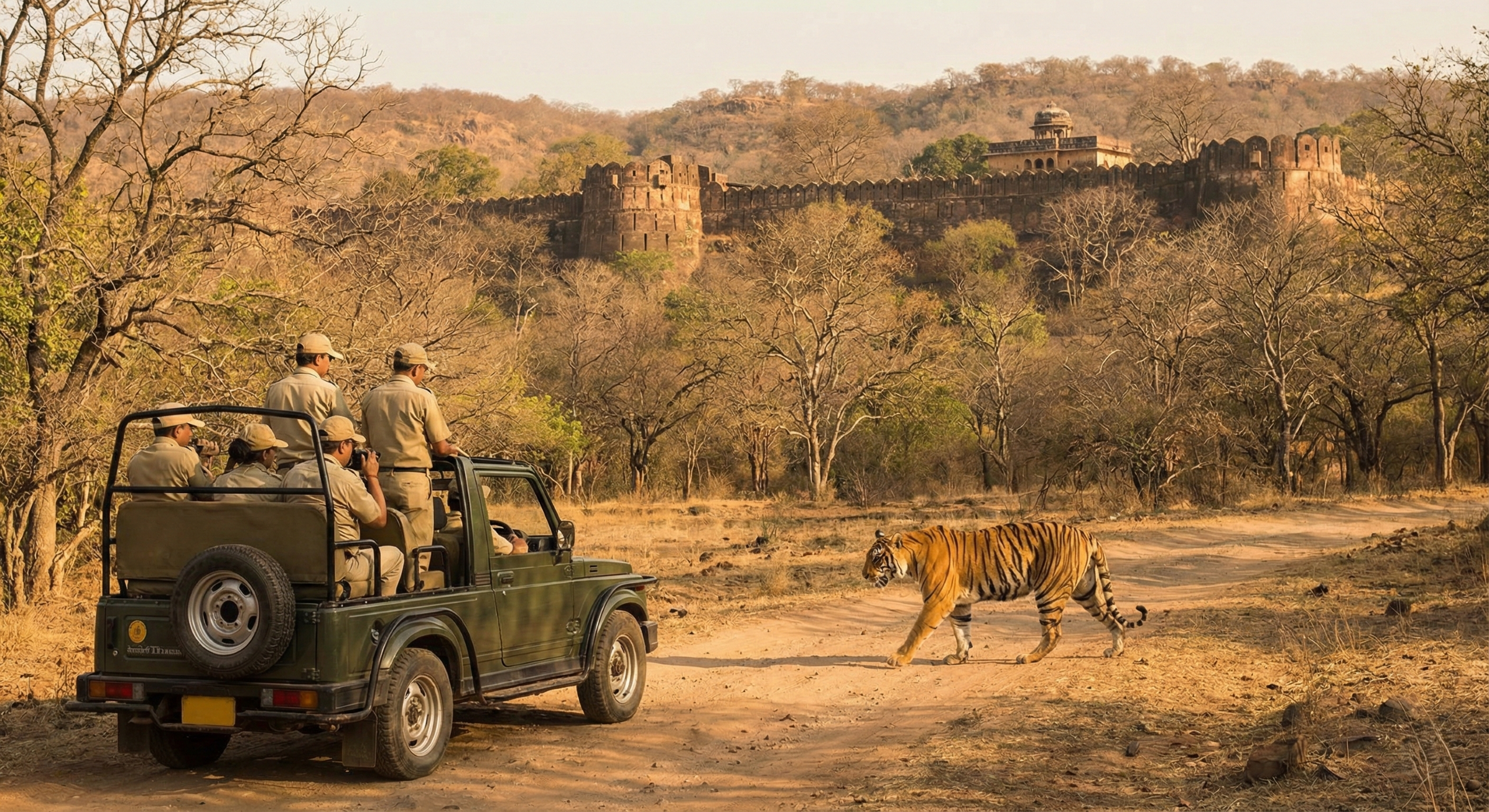
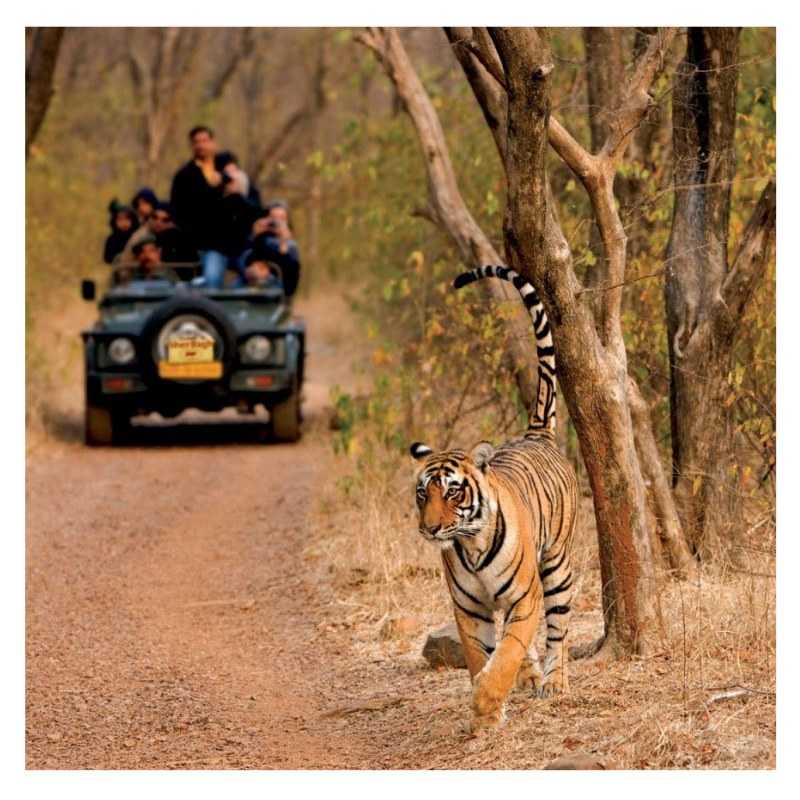
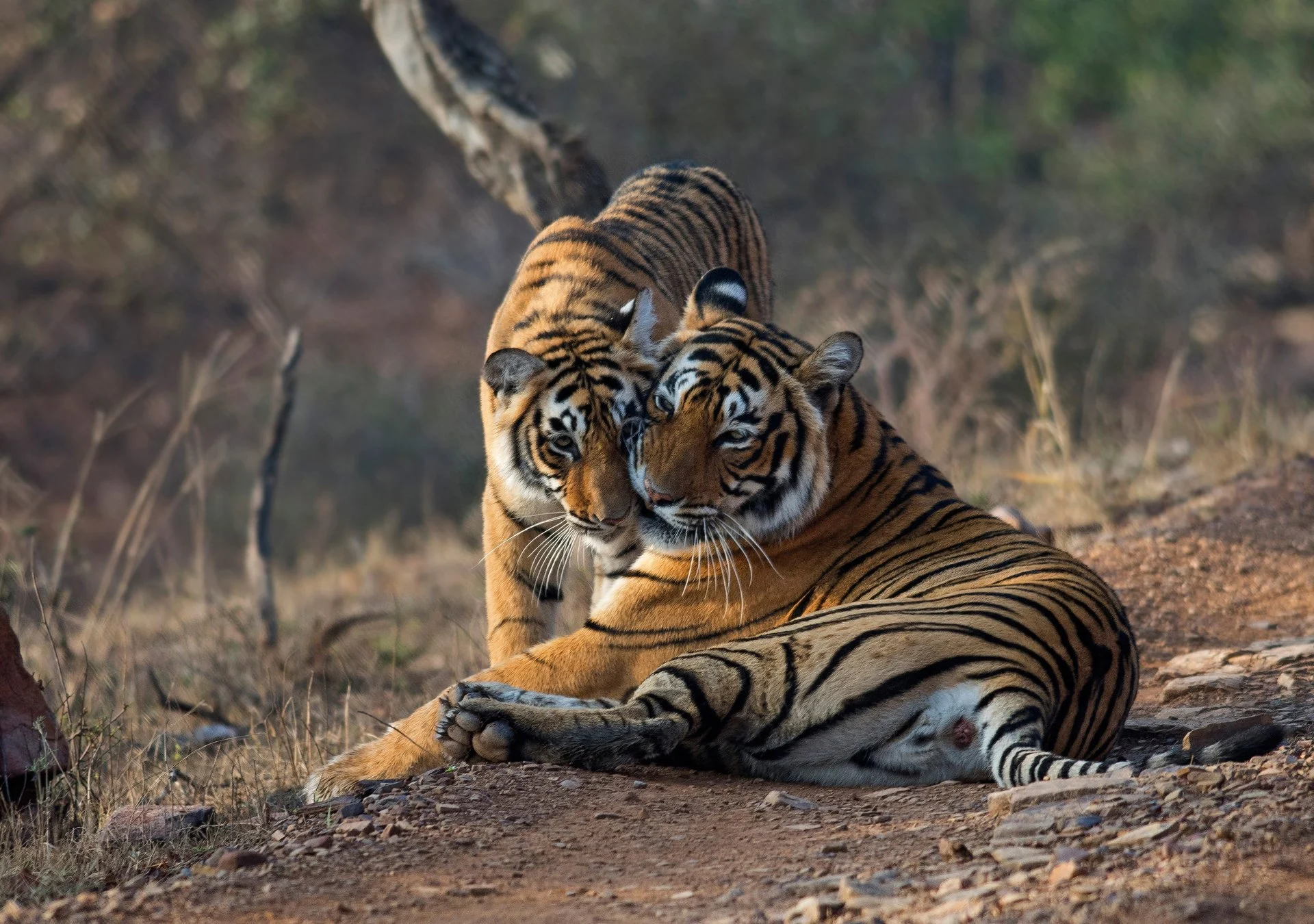
The first ten minutes are dust and acacia. Then the track drops toward water. You pass sambar standing in the shallows, spotted deer freezing at the sound of the engine, peacocks crossing without hurry. Your guide cuts the motor and listens — the alarm call of a langur carries further than anything you will see. If the call repeats and shifts direction, the driver reverses fast and waits at a junction. Sometimes nothing comes. Sometimes a tigress walks the road for four hundred metres and everyone stops breathing.
Halfway through the shift you stop at a viewpoint below the fort walls. You stretch, drink water, watch crocodiles hold still in the lake margin. The vehicle turns back along a different loop, and the light hardens.
Whether you took a ranthambore jeep safari or a canter seat, the return is the same: gates by the shift's close, dust on everything, the guide's logbook filled in. A Ranthambore National Park Tours tour ends where it started, on the same road, an hour later than you expected.
All the details about your upcoming adventure in one place
Ranthambore National Park Tours run through ten numbered zones of dry deciduous forest, banyan groves and lake shores in Rajasthan's Sawai Madhopur district, where Bengal tigers share ground with leopards, sloth bears, marsh crocodiles and over 300 bird species. The reserve was a maharaja's hunting ground before becoming a Project Tiger reserve in 1973, and ruined chhatris, stepwells and the Padam Talao lakes still punctuate the wilderness. Ranthambore National Park Tours tickets are issued as zone-specific forest department permits, so a Ranthambore safari tour is always guided by a licensed naturalist and department driver.
Ranthambore's tigers spent two decades sharing their forest with a working temple, a tenth-century fort, and the hunting rifles of Jaipur's maharajas — the reserve was a royal shooting ground until 1955.
Project Tiger absorbed the land in 1973, and national park status followed in 1980. The 1,334 square kilometres now under protection sit at the meeting point of the Aravalli and Vindhya ranges, a geological seam that gives the terrain its abrupt character: flat-topped plateaus dropping into ravines, three perennial lakes, and dry deciduous forest dominated by dhok, a tree that sheds its leaves in the hot months and leaves sightlines unusually open. That transparency is why Ranthambore National Park Tours became a benchmark for tiger photography in Asia — the cats are visible here in ways they are not in the tall grass of the Terai.
The park is divided into ten numbered zones, each with its own gate and its own resident tigresses tracked by forest officers through pugmark casts and camera-trap grids. Zones one through five ring the fort escarpment and the lakes; six through ten extend north and east into flatter country. A ranthambore jeep safari carries six passengers in an open Maruti Gypsy, while the canter safari seats twenty in a raised open-sided vehicle — the 2,400 INR foreign-adult entry covers the canter option. Vehicle allocation to zones is decided by the forest department, not by operators, which is why gypsy safari ranthambore bookings are made against a shift rather than a chosen zone.
Beyond the tigers, the reserve holds roughly forty mammal species: sloth bear, leopard, striped hyena, marsh crocodile in the Malik Talao shallows, and sambar deer that wade chest-deep to feed on lake weed. More than three hundred bird species have been recorded, among them the Indian skimmer and the paradise flycatcher. Padam Talao, Rajbagh Talao and Malik Talao form a chain of water bodies that concentrate wildlife through the dry season, their banks edged with the ruins of hunting pavilions and chhatris slowly returning to the forest.
Ranthambore Fort rises 200 metres above the plain at the park's centre, a UNESCO World Heritage listing under the Hill Forts of Rajasthan. Its Ganesh temple still draws pilgrims daily, and langur troops occupy the ramparts. The park operates 06:30–18:00 across the week from its gate on Ranthambore Road, Sawai Madhopur. Anyone comparing ranthambore jeep safari ticket options against canter seats is choosing between two views of the same landscape — one intimate, one elevated. Ranthambore National Park Tours tours run in two daily shifts, and the ranthambore jeep remains the most requested vehicle in the reserve.

The dhok sheds its leaves in the hot months, and what remains is a forest that cannot hide its tigers.
Wear muted earth tones — khaki, olive, beige, or grey — since bright colors like red or white can startle wildlife and reduce sighting chances on Ranthambore National Park Tours. Mornings from 06:30 start cool, often under 15°C in winter, so a light jacket or shawl is useful, while a hat and sunglasses help once the sun climbs by mid-morning. Closed shoes are recommended over sandals given the dusty, open-air canter seating.
Only small bags or pouches are permitted inside the canter or gypsy on Ranthambore National Park Tours; large backpacks and suitcases must stay with your hotel or vehicle driver outside the park gate. Forest department staff conduct identity checks against the permit at the entry gate, so carry a valid photo ID matching your booking. Security screening is basic but strictly enforced, and vehicles are checked before departure.
Personal cameras and phone cameras are allowed without extra charge, but tripods and large external flash units are discouraged since sudden light can disturb tigers and other animals. Professional or commercial photography equipment beyond a standard DSLR may require prior permission from the forest department. Drone photography is prohibited anywhere inside the reserve.
Children of all ages can join the canter or gypsy safari, though the early 06:30 start and several hours of open-air travel over uneven terrain suit school-age children better than infants. Car seats are not available in canters or gypsies, so young children must be held or seated securely by an adult.
The open-top canter and gypsy vehicles used for Ranthambore National Park Tours involve a raised step to board, which can be difficult for visitors with limited mobility, and there are no paved paths or ramps once inside the reserve. Wheelchair users should notify the safari operator in advance so a ground-level gypsy seat can be arranged where possible. Restroom facilities near the entry gates are basic and not fully wheelchair accessible.
No food is sold inside the safari zones, so pack a light breakfast and bottled water before the 06:30 departure, since safaris run roughly 3 hours with no stops. Small dhabas and cafes near Sawai Madhopur town and the main entry gate serve breakfast and lunch before or after your slot. Littering inside the reserve is strictly prohibited and can result in fines.
Zones 1-6 closed (weekly rotation)
Zones 1-5 closed (weekly rotation)
Busiest weekday afternoon slot
Higher weekend demand
Opening Hours
06:30–18:00 daily
Address
Ranthambore Road, Sawai Madhopur, Rajasthan 322001, India
Canter Access
Shared canter safari, limited mobility support
Best Arrival Window
06:30–10:00, cooler temperatures and higher wildlife activity
Entry Fee
2,400 INR park entry fee, foreign adult, canter safari, per person
Car · 2h from Jaipur · Fuel and toll costs, roughly 2,500-3,500 INR one-way
Self-drive or hired car from Jaipur takes roughly 2 hours via NH52 to reach Ranthambore Road, Sawai Madhopur.
Public transport · 30-45 min station to gate · Train fares vary by class, local auto-rickshaw 200-300 INR
Regular trains connect Sawai Madhopur Junction to Jaipur, Kota, and Delhi, with the station about 10-13 km from the park's main gate.
Taxi · 20-30 min · 1,000-1,500 INR round trip approx
Taxis and pre-booked cabs run directly from Sawai Madhopur Junction or hotels to the safari gate, arranged the night before to reach by 06:00.
Bike · 15-20 min to gate · 200-400 INR per day rental
Rented motorbikes or bicycles suit reaching nearby town markets but are not permitted inside safari zones themselves.
Safari and park entry bookings for Ranthambore National Park Tours can generally be cancelled or rescheduled up to 24-48 hours before the allotted safari slot for a partial refund, since forest department permits are non-transferable once issued. The 2,400 INR park entry fee (foreign adult, canter safari, per person) is non-refundable for same-day cancellations or no-shows.
Recommended time
3.5-4 hours per shift
Ranthambore National Park Tours run in two daily safari shifts of roughly three to three and a half hours each, one starting near dawn and one in mid-afternoon, so budget close to half a day if you plan to add a second shift on the same trip. The morning shift overlaps the park's 06:30-10:00 best arrival window, when cooler air keeps tigers and deer moving near waterholes rather than resting in shade. Add 30-45 minutes for gate check-in, permit verification, and canter boarding before the vehicle actually enters the zones. A single shift is enough for a first safari tour, but sighting odds and photo light both favor the earlier slot over the afternoon one.
Crowd levels through the day
Weather · crowds · average price — dots go green to amber to red as each metric rises.
Cool mornings between 8-20°C make early canter departures comfortable, and clear skies aid visibility, though this is peak season with higher demand for Ranthambore National Park Tours.
Daytime temperatures climb toward 35°C, water sources shrink, and animals gather near remaining lakes such as Padam Talab, improving sighting odds despite the heat.
Temperatures regularly exceed 40°C, but shrinking waterholes concentrate wildlife, making late spring and early summer popular among photographers before the park closes for monsoon.
Core zones close for the season from July 1 to September 30 under forest department rules, so only limited buffer-zone access may be available in parts of this window.
The park reopens in October with lush greenery and cooler evenings, marking the start of the new safari season and rising demand for Ranthambore National Park Tours tickets.
Core zones 1-5 for Ranthambore National Park Tours sell out days ahead in winter, so book through the forest department portal early.
Gate staff check physical or digital photo ID against your permit name, so keep a printed copy as backup in case of network issues.
Canters seat around 20 people and cost less, while smaller gypsies offer more flexibility for photography enthusiasts booking Ranthambore National Park Tours tickets.
Early morning temperatures can dip below 10°C in December and January despite warm afternoons, so bring a removable jacket.
Guides ask visitors to stay quiet near Padam Talab and Raj Bagh, since sudden noise scatters wildlife gathered at these points.
Zones 1-5 close Wednesdays and Zones 1-6 close Tuesdays under the rotating weekly-closure system, so confirm your zone's schedule before booking.
Naturalist guides accompanying Ranthambore National Park Tours can identify individual tigers by markings and know recent movement patterns.
Ranthambore Road, Sawai Madhopur, Rajasthan 322001
Primary entry for core zones, closest to most hotels and resorts
Get directionsOld city side, Sawai Madhopur, Rajasthan
Entry for buffer zones, roughly 15-20 km from the main gate
Get directionsThe fort came first. Long before Ranthambore National Park Tours carried visitors past Padam Talao, the ridge above it held a citadel. Chauhan rulers are credited with its founding in the 10th century, on a 700-foot outcrop of the Aravalli range where the hills meet the Vindhyas. The site chose itself. Sheer scarps on three sides made siege the only viable method of attack, and siege is what the fort would come to know. Its defining episode belongs to 1301. Hammiradeva, the last independent Chauhan ruler of Ranthambore, had sheltered Mongol rebels who had defected from the Delhi Sultanate. Alauddin Khilji demanded their surrender. Hammiradeva refused, and the Sultanate army invested the fort for roughly a year. The chronicler Amir Khusrau, who accompanied the campaign, recorded its fall. Hammiradeva died fighting; the women of the fort are said to have performed jauhar, mass self-immolation, rather than face capture. Later Rajput tradition attached the name Padmavati to that account and to the lake below, though the historical link between the Padmavati legend and Ranthambore remains disputed by scholars. A small Ranthambore National Park Tours tour of the ramparts still passes the ruined palaces, stepwells and the 12th-century Ganesh temple that survive the episode. After 1301 the fort changed hands repeatedly. Akbar took it in 1569, folding it into Mughal territory, and it later passed to the Kachhwaha Maharajas of Jaipur, who used the surrounding forest as private hunting ground into the 20th century. That shooting reserve became a wildlife sanctuary in 1955 and entered Project Tiger in 1973, gaining national park status in 1980. UNESCO inscribed the fort as part of the Hill Forts of Rajasthan in 2013. Ranthambore Fort tours and jungle safari Ranthambore itineraries now share the same gate. Ranthambore National Park Tours tickets cover park entry at 2,400 INR (Park entry fee, foreign adult, canter safari, per person); Ranthambore National Park Tours tours run daily 06:30–18:00 from Ranthambore Road, Sawai Madhopur.
Chauhan rulers establish the hilltop citadel on a 700-foot Aravalli outcrop.
Alauddin Khilji's year-long siege ends with Hammiradeva's death and the jauhar of the fort's women.
Akbar captures Ranthambore and absorbs it into Mughal territory.
The fort and its forests pass to the Kachhwaha Maharajas of Jaipur as a private hunting reserve.
The former shooting grounds are declared the Sawai Madhopur Wildlife Sanctuary.
Ranthambore is enrolled in Project Tiger at the programme's launch.
The reserve is upgraded to full national park status.
UNESCO inscribes Ranthambore Fort within the Hill Forts of Rajasthan.
Ranthambore's largest lake fills with lotus blooms and mirrors the tree line at dawn; stand near the Jogi Mahal bank in the open jeep for the reflection shot, since visitors cannot walk down to the shoreline itself.
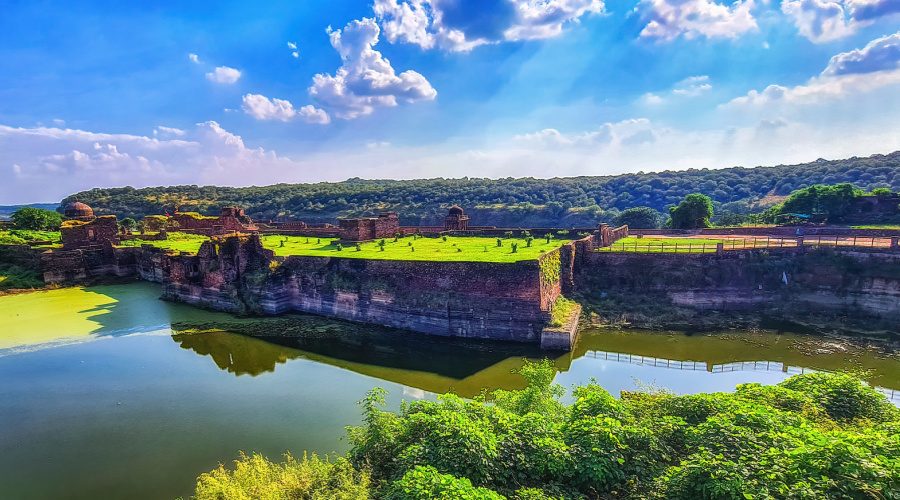
Crumbling arches and pavilions from the old royal hunting grounds sit right at the water's edge at Rajbagh Talab, with deer and sometimes tigers passing through the frame; ask your guide to slow the jeep along the lake's near bank for the widest angle on the ruins-and-water composition.
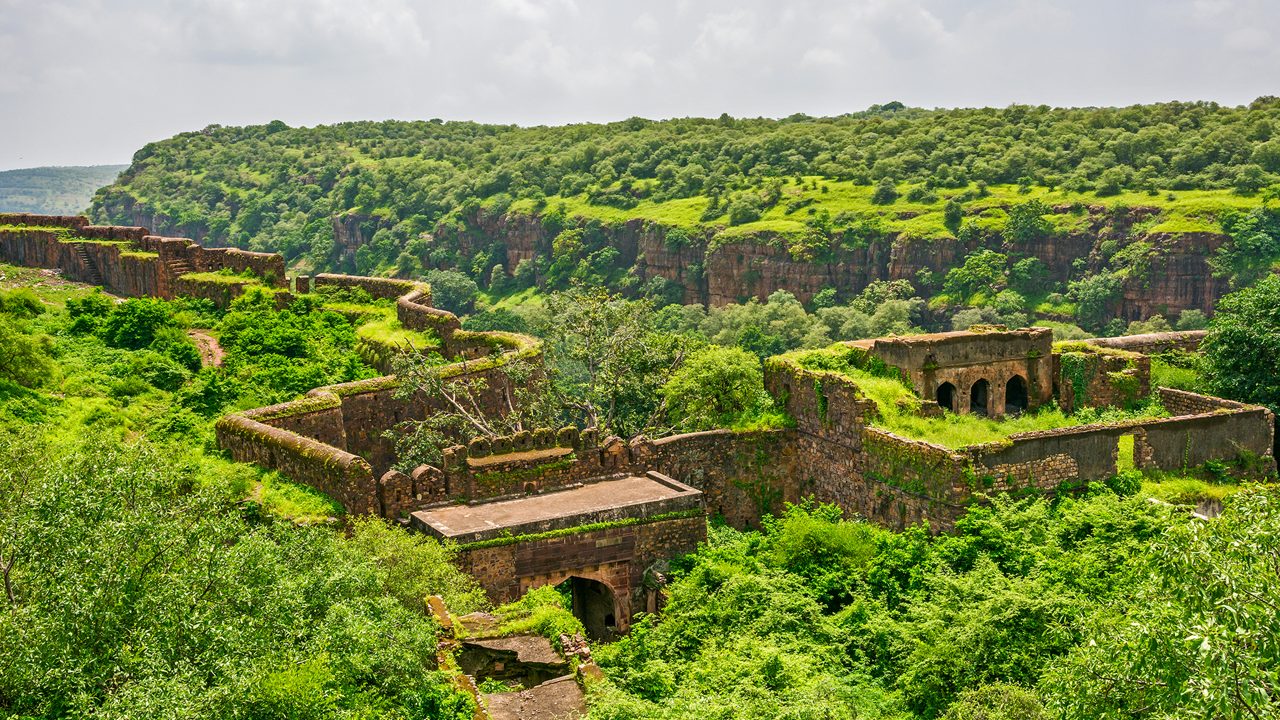
A rise on the Zone 3 route gives an open sightline over the forest canopy and distant water bodies, useful for a wider landscape frame between wildlife stops; many Ranthambore National Park Tours guides pause here briefly since it sits along the fixed safari loop rather than a dedicated photo halt.
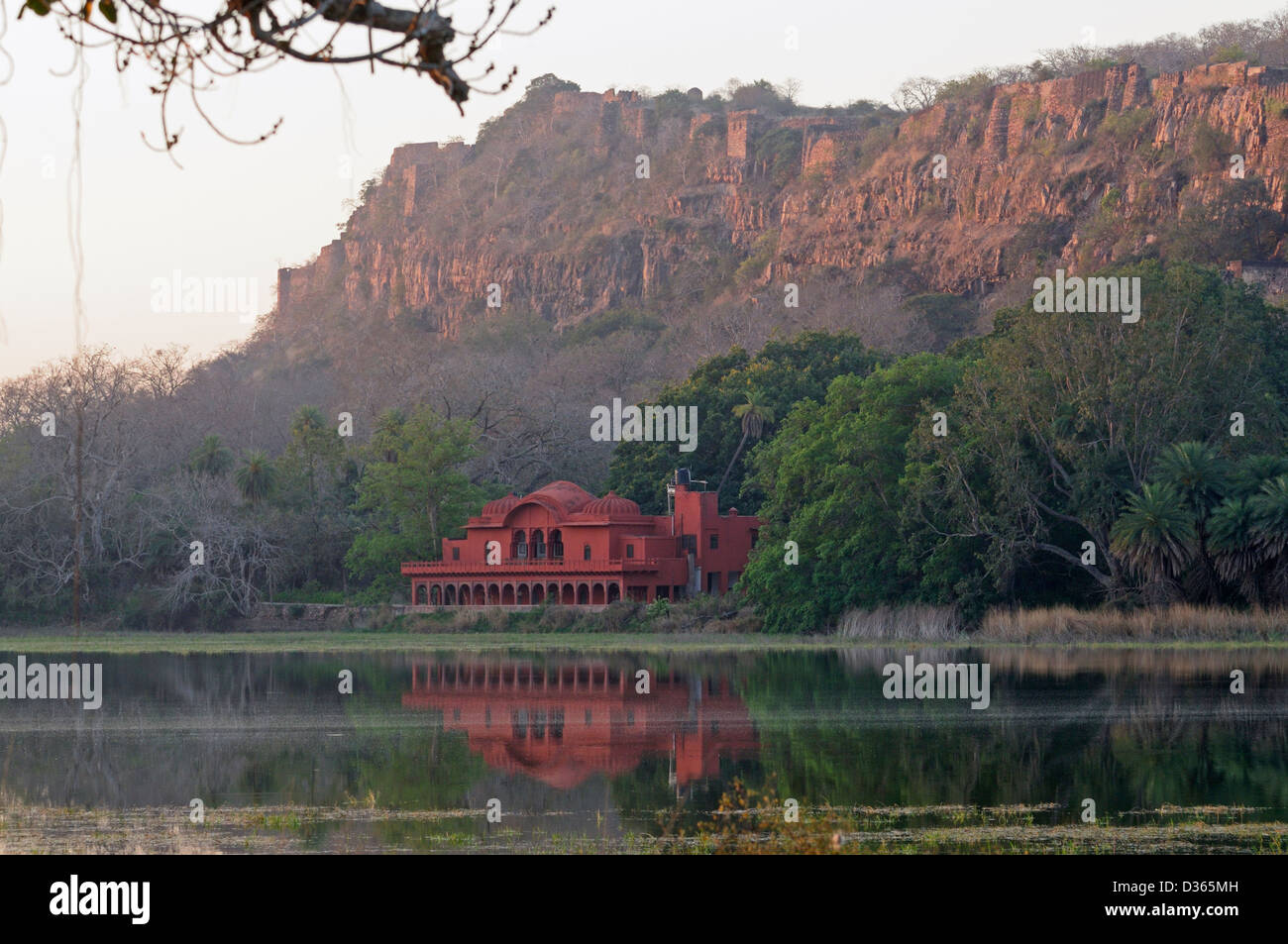
The red sandstone former hunting lodge sits directly on Padam Talao's bank beneath one of India's largest banyan trees, and its facade silhouettes well against the lake at sunrise; the building itself is closed to entry, so shots are taken from the jeep track along the water.
Seen from below rather than climbed during the drive, the fort's stone ramparts rise above the tree line and form a recurring backdrop across several Zone 3 lakes; a wide-angle lens from the jeep captures both the ancient walls and the water in one frame, a detail worth requesting when you book a Ranthambore National Park Tours jeep safari ticket.
Families booking Ranthambore National Park Tours should expect a genuine wildlife outing rather than a guaranteed tiger show: kids sit for a long open-vehicle ride through dusty tracks, and patience matters more than a schedule. Choosing the right vehicle and pacing expectations well makes the difference between a restless afternoon and a good family safari.
A shared canter seats up to 20 and keeps the whole family together for every sighting, which suits parents who don't want to split into separate vehicles. A jeep holds only 6 and gives more legroom and quieter viewing, useful if a child gets overstimulated by crowds.
Most operators suggest children above 5 get more out of the experience, since a Ranthambore National Park Tour safari runs roughly 3.5 hours seated with long stretches of nothing dramatic happening. Toddlers under 4 enter free but often grow restless on the bumpy, dusty ride well before the drive ends.
Bring the morning slot when animals are more active, and treat the first hour as the most alert window for kids before energy dips. Pack a filled water bottle and snacks, since there is no stopping mid-safari once the gate closes behind you.
There are no baby-change rooms or stroller paths inside the park itself, so handle diaper changes and bathroom visits at the gate before boarding. Strollers stay in the vehicle at all times and are not useful once the safari begins.
Prepare children for deer, langurs, peacocks, and crocodiles as the likely sightings, with tiger appearances a possibility rather than a promise. Framing the trip around the whole forest, not just tigers, keeps disappointment low if the cats stay hidden.
Real experiences from real travelers
We booked one of the Ranthambore National Park Tours for the 6am slot and the cold air off Padam Talao made the whole ride feel unreal. Our naturalist tracked alarm calls from spotted deer for twenty minutes before a tigress crossed ahead of us. The dust and the light through the dhok trees stayed with me more than the sighting itself.
Three drives, two tiger sightings, and honestly the crested serpent eagle over the lake was the shot I kept. Our driver knew which watering holes the sambar favour in late April heat. Good binoculars matter more than a long lens here.
Our Ranthambore tiger safari ran through Zone 6 and we saw mostly deer, langurs and one very relaxed sloth bear. No tiger, but the banyan and the ruined chhatris on the ridge made the morning. Bring a scarf for the dust, seriously.
Late June is humid and green and far fewer vehicles are around. We had a leopard on the rocks above the track for a full minute in flat grey light. The Ranthambore National Park Tours tour we took ran on time and the pickup from our hotel was simple.
Every drive we could see the fort ramparts sitting above the forest, which gave the landscape a scale I hadn't expected. Our guide explained the lake system and how the tigresses split territory around Rajbagh. Cold hands at dawn in February — layer up.
Sitting still while the forest goes quiet then erupts in alarm calls is the actual experience. Ranthambore rashtriya udyan safari delivered a tiger crossing a dry nullah about eighty metres out. Our naturalist had the vehicle positioned before anyone else arrived.
We compared several Ranthambore National Park Tours tickets options and went with a shared jeep for two consecutive drives. Marsh crocodiles at the lake edge, plenty of peafowl, and one distant tiger silhouette at dusk. Confirmation came through quickly and the driver was on time both mornings.
November brings pleasant weather and a lot of vehicles in the popular zones. Still, the Rajasthan wildlife landmarks around the park — the old gates, the stepwells near the buffer — made the drive between sightings interesting. Ask for a zone with fewer bookings if you can.
Visiting in the shoulder season meant lush undergrowth and almost no crowds on our Ranthambore National Park Tours safari. No tiger, but a herd of nilgai, several kingfishers and enormous banyan roots we could walk our eyes over. Our guide was frank about the odds, which I appreciated.
Heat in July is real but the animals concentrate near water, and Rajbagh was busy with sambar all morning. Our guide read pugmarks in the track dust and called the direction correctly. Booked a Ranthambore park tour with a small group and it never felt rushed.
Everything you need to know for your journey
Ranthambore National Park Tours run daily from 06:30 to 18:00, with the 06:30-10:00 morning slot offering cooler temperatures and higher wildlife activity.
Canter and gypsy vehicles have a raised boarding step and no paved interior paths, so visitors with limited mobility should notify the operator in advance to arrange ground-level seating.
Large backpacks, tripods with large flash units, drones, food packaging that creates litter, and loud audio devices are among the items not permitted inside the safari zones.
Personal cameras and phones are allowed on Ranthambore National Park Tours without extra charge, though large flash units and drones are discouraged or prohibited to avoid disturbing wildlife.
Winter months from November to February draw the highest demand for Ranthambore National Park Tours, while October just after the monsoon reopening tends to be quieter with fresh greenery.
Yes, muted earth tones like khaki, olive, or beige are recommended for Ranthambore National Park Tours, since bright colors can startle animals during the safari.
No food is sold inside the safari zones, so pack a light breakfast and water before departure, then eat afterward at cafes near Sawai Madhopur town.
Most visitors reach the park by car or taxi from Sawai Madhopur Junction, about 10-13 km from the main gate, or by a roughly 2-hour drive from Jaipur via NH52.
Children of all ages can join Ranthambore National Park Tours, though the early 06:30 start and open-air terrain suit school-age children better than infants.
Bookings can typically be cancelled or rescheduled 24-48 hours ahead for a partial refund, though the 2,400 INR park entry fee is non-refundable for same-day cancellations.
Ranthambore Fort and the Trinetra Ganesh Temple inside it sit about 15 minutes from the main gate and pair naturally with a Ranthambore National Park Tours itinerary.
Yes, Zones 1-5 close on Wednesdays and Zones 1-6 close on Tuesdays under the forest department's rotating weekly-closure system.
A 10th-century hill fort overlooking Zone 3, with ancient temples and stepped ramparts inside its walls.
One of the park's three major lakes, backed by views of Ranthambore Fort and a common tiger-sighting point.
A temple inside Ranthambore Fort dedicated to a three-eyed depiction of Ganesh, drawing pilgrims year-round.
Local bazaar area with shops, eateries, and handicraft stalls near the railway station.
A wetland outside the core reserve popular with birdwatchers for migratory species in winter.
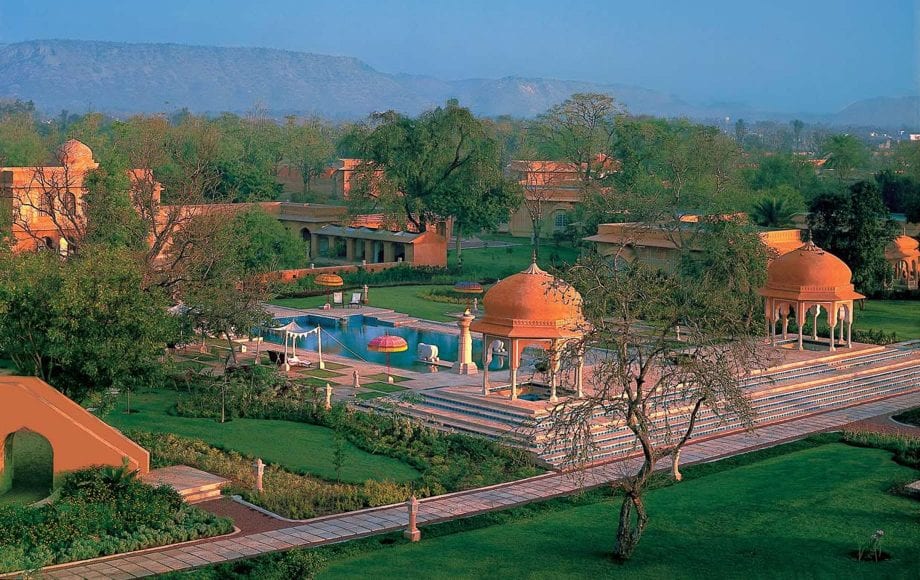
Luxury tented resort set among mango orchards close to the park's main entry gate.
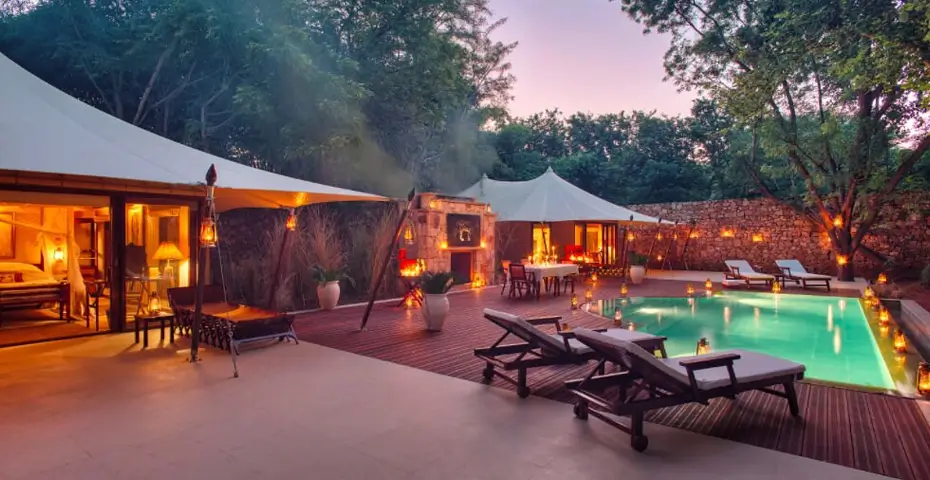
Boutique tented camp styled on 1920s shikar camps, popular among wildlife photographers.
Mid-range hotel with garden grounds a short drive from the safari gate.
Cluster of budget guesthouses and homestays near the railway station and town market.
Join thousands of happy travelers who have discovered this incredible experience
Book Your Experience Now